Initial Condition & Challenge
Traditional monitoring methods did not clearly explain the root cause, making repair planning complex and uncertain.
Limitations of Convential Monitoring
All turbines at the site were also equipped with the Conventional Monitoring System..
The load-dependent behavior remained unidentified and unexplained
As a result, the problem was visible in terms of vibration levels, but no actionable diagnosis could be made
Detection through Vib360
With Vib360 deployment, detailed dynamic analysis revealed:
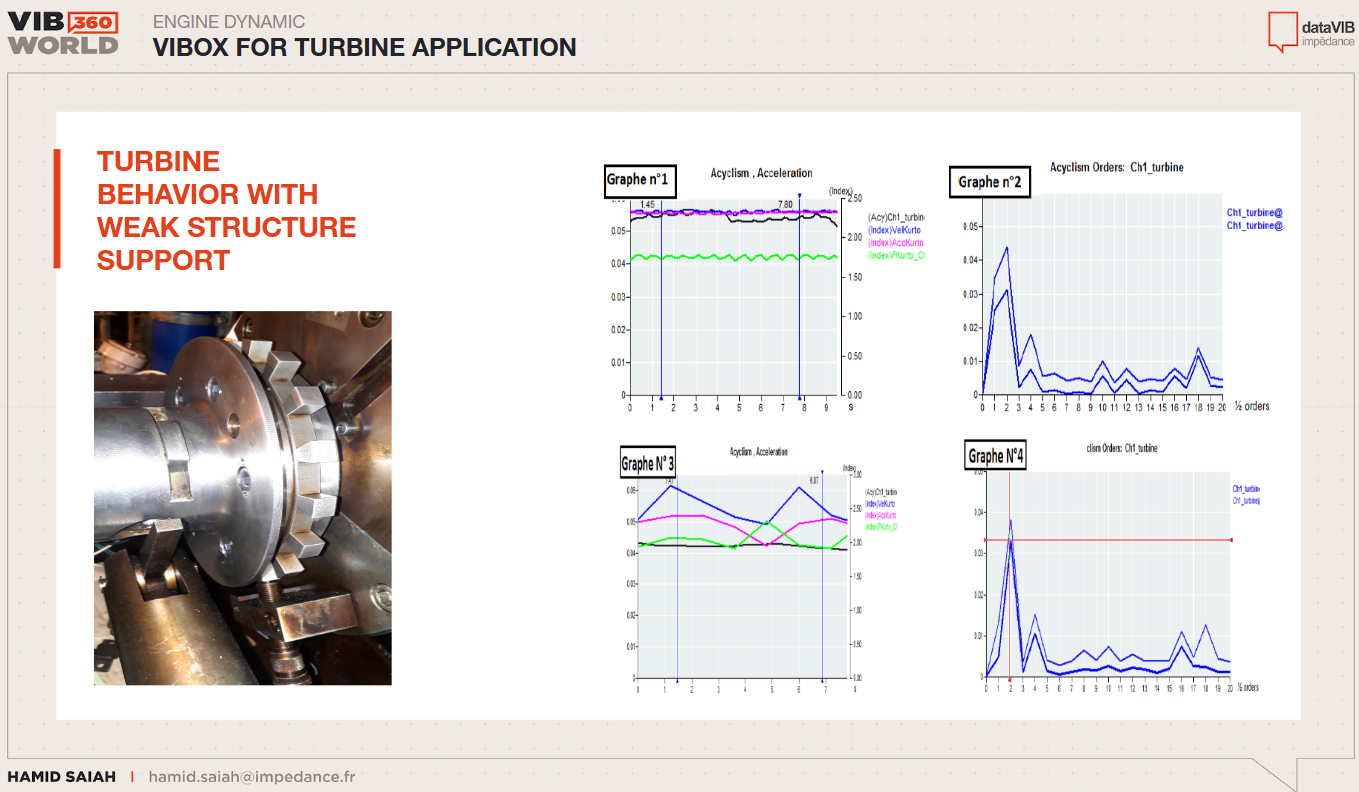
This made it clear that the issue was not originating from rotating components alone, but from the supporting structure itself.
Diagnosis & Insight
Vib360 enabled the team to understand that:
➡️ The structural support of the turbine was insufficiently rigid
As load increased:
This created a load-dependent mechanical behavior, which is often difficult to capture with conventional techniques.
Why this was Critical
Outcome & Impact
If the issue had not been diagnosed, the consequences could have been severe.
At higher loads, the weak gearbox structural support led to increased deformation, which in turn affected the alignment of rotating components. This created conditions where the blade wheel could come into contact with stationary parts (rubbing)—a phenomenon that was later confirmed during maintenance.
Such contact would have:
Without early identification, the issue could have progressed unnoticed, resulting in unplanned shutdown, significant damage, and costly downtime.